Whole-Home Air Filtration & Indoor Air Quality Solutions in Phoenix West Valley
Improve indoor air quality by capturing dust, allergens, and fine airborne particles while maintaining proper airflow through your HVAC system.
Why Many Valley Homes Still Struggle With Dust and Air Quality
Phoenix homes are constantly exposed to airborne particles from desert dust, construction activity, traffic exhaust, pollen, and everyday household pollutants. Many homeowners assume replacing a standard AC filter will solve these problems, but most HVAC filters are designed primarily to protect the equipment — not improve indoor air quality throughout the home. Improving indoor air quality requires filtration solutions that capture smaller particles while still allowing the HVAC system to move air efficiently.
Signs Your Home May Need Better Air Filtration
Many homeowners start exploring filtration upgrades after noticing one or more of the following:
- Dust quickly returns to furniture after cleaning
- Allergy symptoms feel worse inside the home
- Fine dust collects around supply vents
- The home smells stale after being closed up
- Filters become dirty very quickly
- Construction or desert dust seems to enter the home easily
- Return Grill Whistles or filter bows when dirty or using higher MERV Filters
These issues don’t always mean filtration alone is the solution, but they often indicate that improving filtration, airflow, or ventilation may help.
Common Air Quality Issues We See in Phoenix Home
While every home is different, certain air quality and dust issues tend to appear repeatedly depending on how and when the home was built.
Newer Homes (2005–Present)
Mechanical Ventilation and Filtration Limitations
Many newer homes include outside-air intake systems connected to the HVAC return. These systems were added because newer construction is typically tighter than older homes, meaning less natural air leakage.
While these systems introduce outside air, they often do so with minimal filtration and without energy recovery. In dusty environments like Phoenix, this can allow fine particles to enter the home unless filtration and ventilation are properly designed.
Because tighter homes experience less natural air exchange, pressure imbalances inside the home can also become more noticeable. Closing interior doors, undersized return ducts, air leaks around recessed lights and other attic penetrations can influence how air moves in and out of the house. Proper filtration, airflow balance, and controlled ventilation help ensure outside air entering the home is clean and delivered in the right amount.
Production Homes with Limited Returns (Mid 80's to Early 2000's
Filtration and Airflow Restrictions
Many homes were built with limited return duct capacity and small filter areas. Installing high-efficiency filters in these systems without evaluating airflow can reduce system performance and create comfort problems. Arches, vaults and columns started to become common and insulation and attic air leaks became weak points. Duct sealing was not common yet either, allowing dust from attics and wall cavities to enter the duct system.
Adding additional return air pathways and properly sealing the duct system can address several issues at once. Benefits will be increasing available filter surface area, improving overall airflow, and when strategically located, helping balance comfort throughout the home typically saving on energy costs.
Older Ranch Homes (Pre-1990 Construction)
Attic Air Leakage and Bypass Pathways
Many older ranch-style homes allow attic air to enter the living space through ceiling penetrations and attic bypasses such as furred down mechanical chases or drop soffits, recessed lighting, plumbing penetrations, drywall separation at top plates and open wall cavities.
Over time, these openings allow attic dust and unfiltered air to move into the home, especially when the HVAC system runs or when temperature differences between the attic and the living space create natural airflow.
Drop soffits above kitchen cabinets and along hallways are a particularly common pathway in many Phoenix homes, where large open cavities connect the attic space directly to the interior framing. Unless these areas are properly sealed, attic dust and insulation particles can slowly migrate into the living space. Air sealing these bypasses helps reduce the amount of attic air entering the home and improves the effectiveness of both insulation and filtration. Many homeowners are surprised how much attic air can enter a home through these small openings until testing and inspection reveal the pathways.
Why High-Efficiency Filters Can Sometimes Create Comfort Problems
A common mistake occurs when restrictive high-efficiency filters are installed in HVAC systems that were never designed for them.
Most residential systems were originally designed to operate with very low-resistance filters. When high-MERV filters are added without evaluating airflow, several problems can occur:
- Reduced airflow through the system
- Increased system strain and energy use
- Hot and cold rooms throughout the home
- Shortened equipment life
- Exaggerated duct leakage increasing dust
This is why filtration upgrades should always consider static pressure, return air capacity, filter surface area, duct leakage and more.
Sharp Home Solutions evaluates these factors before recommending filtration improvements.
Why System Testing Matters Before Filtration Upgrades
Air filtration and airflow are closely connected. Higher filtration efficiency increases resistance to airflow, which can impact how the HVAC system operates.
During a whole-home evaluation we often measure:
- Supply and Return Static pressure Testing
- Return air capacity
- Filter surface area
- Airflow delivery throughout the home
- Duct Leakage
These measurements help determine whether filtration upgrades can be implemented using the existing HVAC system or whether improvements such as additional return air or larger media filters may be beneficial.
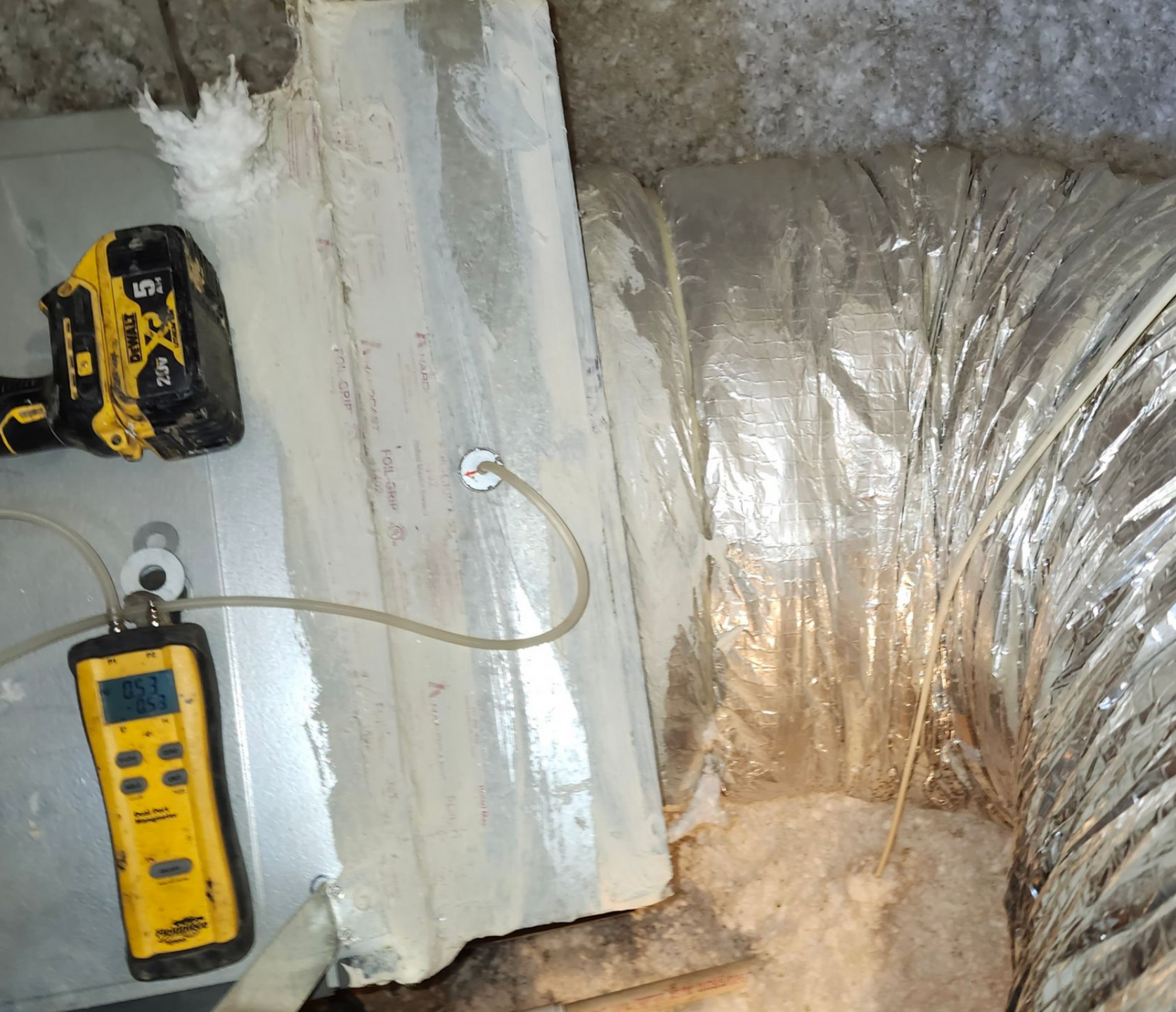
Higher filtration levels must be balanced with proper airflow to maintain system performance.
Understanding MERV Ratings and Filtration Efficiency
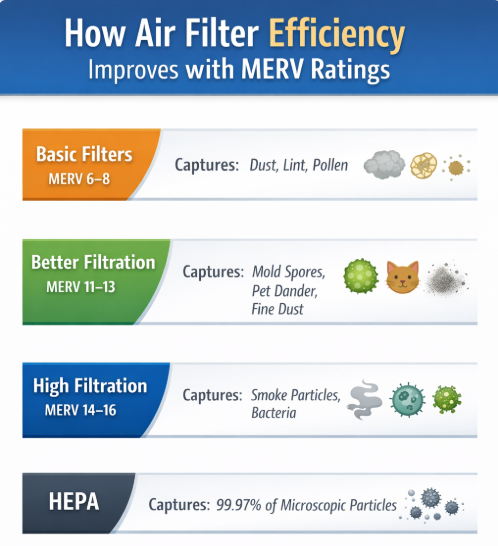
MERV ratings describe how effectively a filter captures airborne particles.
Higher MERV ratings capture smaller particles such as:
- Dust
- Pollen
- Pet dander
- Fine particulate matter (PM2.5)
However, higher filtration efficiency also increases airflow resistance, which is why filter size and system design must be considered when improving filtration.
Standard 1-inch filters often provide limited filtration while also restricting airflow when higher-MERV versions are installed.
Larger media filters and high-surface-area filtration systems allow improved filtration with less airflow restriction.
Whole-Home Filtration Options
Different homes benefit from different filtration strategies and different clients have different needs. In some cases the existing HVAC system can support improved filtration. In other situations, additional return air or dedicated filtration equipment may provide better results. Some homes have adequate filtration but lack fresh air. Your final desired outcome will determine plan of action.
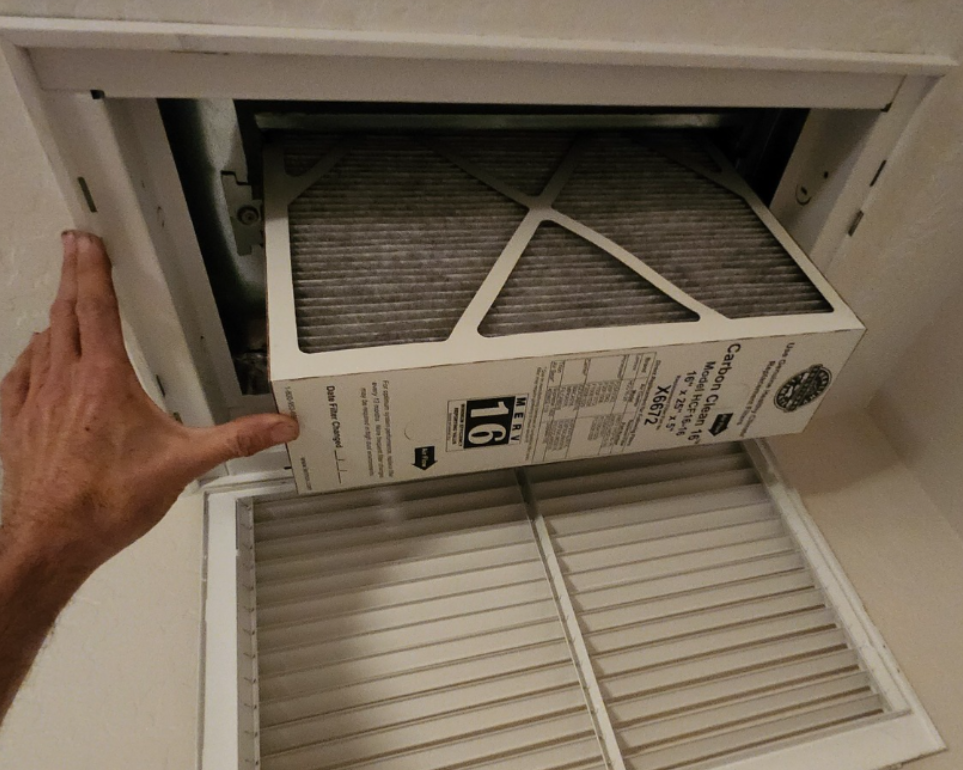
High-Performance Return Filter Grilles
& Filters
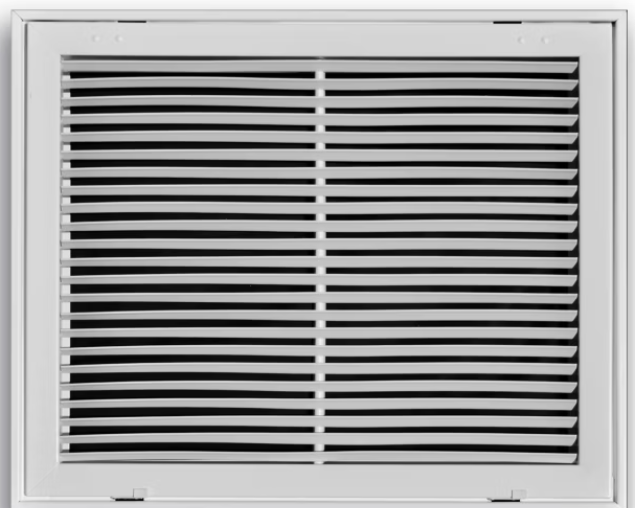
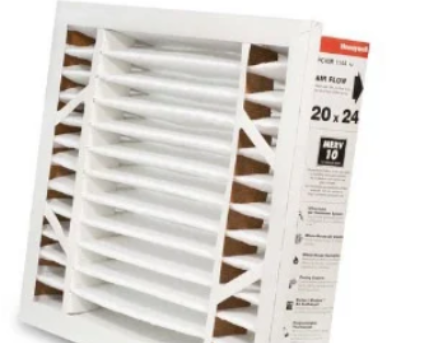
In some homes, installing high flow, high-surface-area return filter grilles with High MERV Filters can improve filtration while improving airflow. These solutions may also help distribute filtration throughout the home when multiple returns are present.
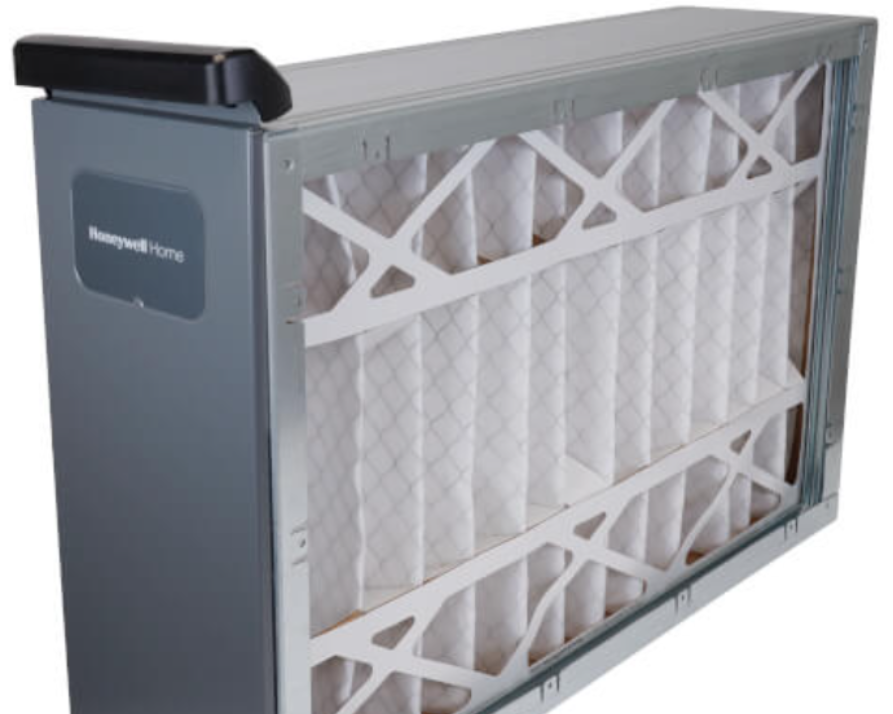
Upgraded HVAC Filtration
Upgrading the filtration used by the existing HVAC system can significantly improve indoor air quality. Because media filters have a larger surface area they provide higher filtration efficiency while maintaining airflow performance.
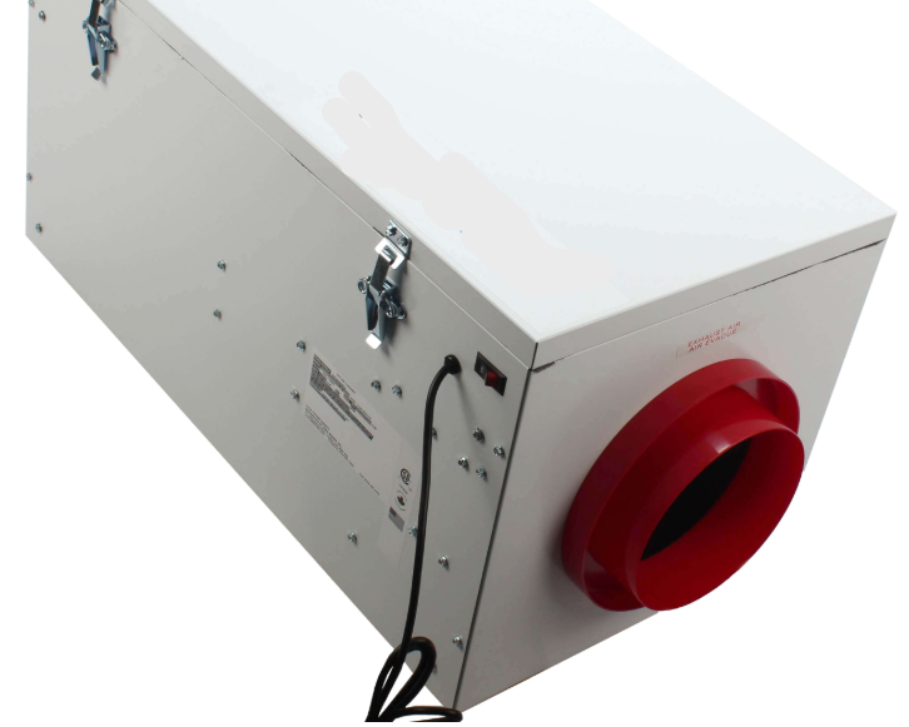
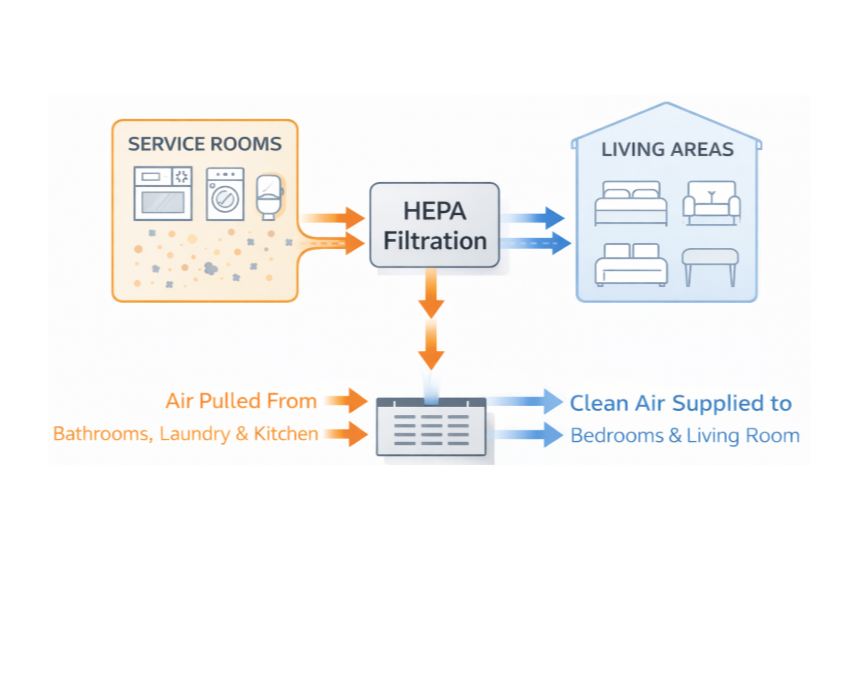
Dedicated Air Filter & Cleaning Systems
Standalone filtration or air-cleaning systems can provide enhanced particle removal when higher levels of filtration are desired. These may include HEPA filtration systems or advanced air cleaning technologies designed to capture or neutralize airborne contaminants.
Additional Air Cleaning Technologies
While filtration is highly effective at capturing airborne particles such as dust, pollen, and pet dander, some indoor air quality concerns involve biological contaminants or gaseous pollutants from sources such as hobby glues, paints, cleaning products, or other household activities common in modern Phoenix homes that may benefit from additional air cleaning strategies.
In certain situations, technologies such as germicidal UV lights, photocatalytic oxidation (PCO), or activated carbon filtration can be used to address specific indoor air quality goals. These systems may help reduce biological contaminants such as bacteria and viruses or assist with odors and chemical compounds that standard filters are not designed to capture.
Sharp Home Solutions focuses on recommending proven technologies that do not produce ozone and when necessary that integrate safely with the home's existing mechanical systems.
The goal is always the same: identify the source of the issue and apply the right combination of filtration, airflow improvements, and air cleaning technologies to achieve the healthier indoor air you're looking for.
Filtration Works Best as Part of a Whole-Home Strategy
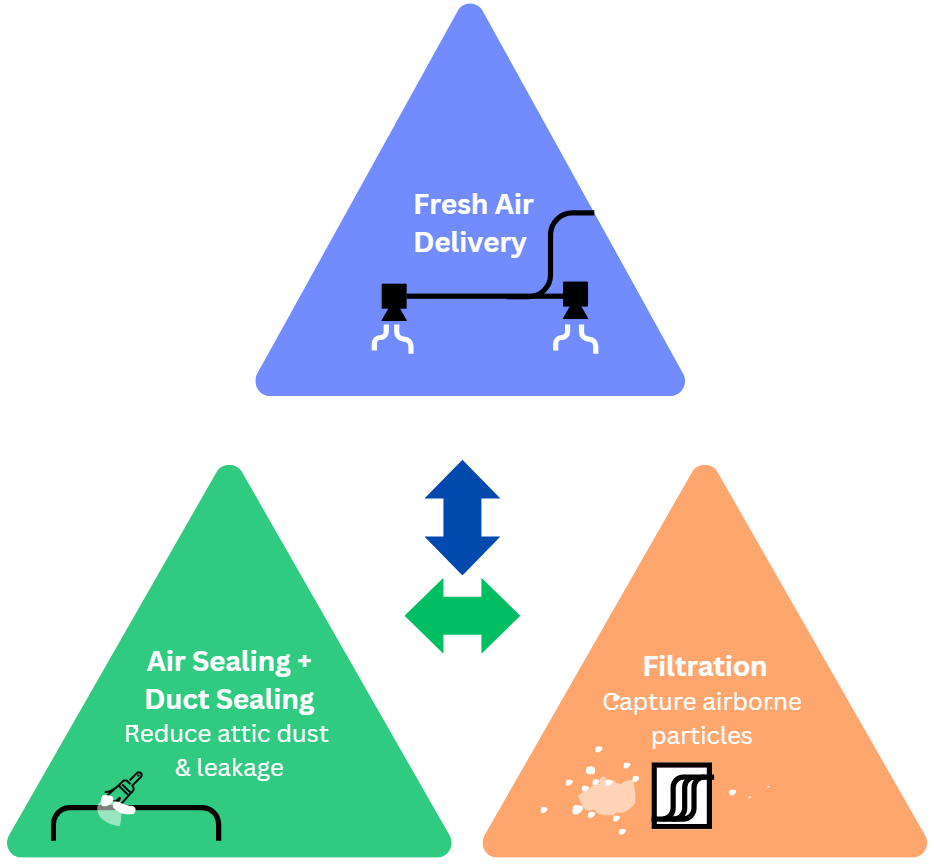
Indoor air quality improvements typically involve three strategies working together:
Whole-Home Indoor Air Quality Strategy
Source Control -Air Sealing
and
Duct Sealing
Reduce dust and attic air entering the home and duct system.
Particle Capture -
Filtration
Capture airborne particles circulating through the HVAC system.
Fresh Air Dilution -
Ventilation
Introduce controlled fresh air while exhausting stale indoor air.
Source Control → Filtration → Fresh Air
When Filtration Improvements Are Most Effective
Filtration upgrades often provide the greatest benefit in homes experiencing:
- Excessive dust accumulation
- Allergy or respiratory sensitivity
- Construction dust in growing communities
- Outdoor particulate pollution
- Homes with improved air sealing and insulation
- Duct System (s) have been sealed
During a home evaluation we help determine whether filtration improvements alone will address the issue or whether other building performance factors are contributing.

Many homeowners are surprised how much dust enters the home through attic air leaks, duct leakage, or poorly designed filtration systems.
Filter Maintenance and Longevity
Filter lifespan depends on the type of filter installed, system operation and air content.
Typical examples include:
- Standard 1-inch filters: 30-90 days depending on filtration level
- Larger media filters: often 6-12 months
- HEPA systems: replacement schedules vary by equipment and most are staged filters with slightly different intervals.
Larger filtration systems often provide improved filtration while reducing maintenance frequency.
How Implementation Works
Sharp Home Solutions focuses on the testing, diagnostics, and system design that determine what your home actually needs. When mechanical upgrades are recommended, we coordinate with licensed HVAC partners to ensure proper installation and performance. Post inspections and testing will be performed to ensure performance.
Ventilation and indoor air quality improvements often require careful measurement, airflow analysis, and building science considerations that go beyond equipment selection alone. Our role is to ensure the strategy is correct before any installation work begins.
Installation partners are selected based on project needs, licensing requirements, and performance standards, so improvements are completed correctly and verified through testing.
Sharp Home Solutions provides filtration evaluation services throughout the Phoenix Metro and West Valley, including Peoria, Sun City, Sun City West, Surprise, and Buckeye.
Whole-Home Air Quality & Filtration Evaluation
Every home is different. The best filtration approach depends on HVAC system design, airflow capacity, and the specific air quality concerns within the home.
Professional evaluation helps determine whether improved filtration, return air upgrades, or other indoor air quality improvements will provide the greatest benefit. Often indoor air quality problems are caused by airflow and leakage issues that can’t be identified without testing.
Whole-Home Airflow, Leakage & Filtration Evaluation start at $99
for most single-system homes.
This includes diagnostic testing that helps identify the best opportunities to improve airflow, filtration, and indoor air quality. Testing may include:
- Blower door testing (home leakage)
- Duct leakage testing
- Supply and return static pressure measurements
- Identification of attic air leakage pathways
- Visual duct system inspection
- Filtration system evaluation
The goal is to determine the most effective way to improve indoor air quality without negatively affecting HVAC system performance.
Schedule Your Airflow Leakage & Filtration Evaluation
Takes about 60 seconds to request an appointment. We’ll contact you to confirm a convenient time. Prefer to talk first - Call 602-525-5973
We respect your privacy. Your information is only used to respond to your request.
We typically respond within the same business day.
Serving homeowners throughout the Phoenix Metro and West Valley.